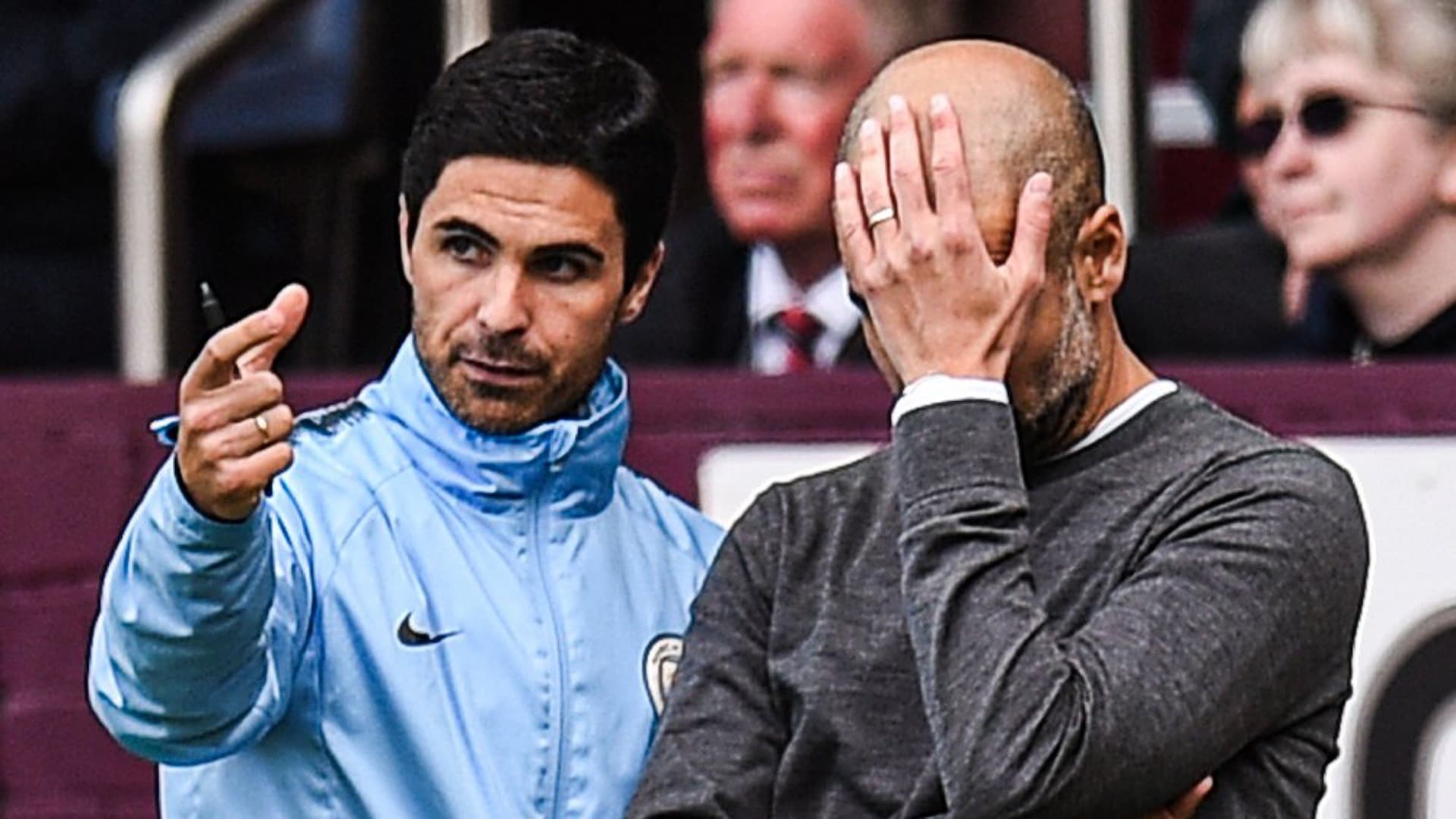

The Influence of Pep Guardiola on Top World Coaches: Arteta, Xavi, Luis Enrique, Xabi Alonso, Maresca, and Erik Ten Hag
Pep Guardiola is widely regarded as one of the most influential football coaches of the modern era. His tactical innovation, style of play, and success at top clubs have left a significant imprint on the footballing world. Many of his former players and assistants have gone on to forge successful managerial careers themselves, adopting and adapting aspects of his philosophy. Among them are Mikel Arteta, Xavi Hernandez, Luis Enrique, Xabi Alonso, Enzo Maresca, and Erik ten Hag—coaches who have embraced Guardiola’s principles and applied them in their managerial journeys, carving their own niches in the world of football.
Mikel Arteta: The Arsenal manager’s journey to the top has been profoundly influenced by Guardiola’s mentorship. Having played under Guardiola at Manchester City, Arteta absorbed a wealth of tactical knowledge that would later form the backbone of his coaching philosophy. Arteta’s Arsenal has become a testament to Guardiola’s high-pressing, possession-based game, with an emphasis on fluid attacking play and positional rotations. Arteta has credited Guardiola for teaching him how to approach coaching with a detailed understanding of game tactics and individual player development. His style reflects Guardiola's vision but with his own touch, blending technical discipline with high energy, a hallmark of the modern Arsenal side.
Xavi Hernandez: Xavi, a product of Barcelona’s La Masia academy, grew up under the guidance of Guardiola during his time at the club. Having played alongside Guardiola as a player, Xavi has embraced many of the tactical principles that made Barcelona so successful under the Catalan manager. Xavi’s current approach to coaching at Barcelona is heavily influenced by Guardiola’s philosophy, particularly the importance of maintaining possession and playing a brand of football that emphasizes ball control, patience, and pressing high. Xavi’s tactical choices at Barcelona, such as positional play and youth development, align with Guardiola’s influence, yet Xavi is working to blend it with his own interpretations and an understanding of how the modern game has evolved.
Luis Enrique: Although Luis Enrique and Guardiola have different managerial backgrounds, their paths have converged in terms of footballing philosophy. Both have a preference for intense pressing and a possession-oriented game. Luis Enrique, having played under Guardiola at Barcelona, took many of the lessons learned from his time with the Catalan coach into his own managerial career. At Barcelona, Enrique led a team that played with a similar tactical approach to Guardiola’s, integrating fast, fluid football with high pressing and positional play. Enrique’s successful tenure at Barcelona, and his work with the Spanish national team, further highlights how Guardiola’s influence on the game extends beyond just club football, shaping entire national systems.
Xabi Alonso: Another former Barcelona player, Xabi Alonso, brings a more cerebral approach to his coaching. Xabi, who was part of Guardiola’s Bayern Munich squad, learned firsthand the intricacies of Guardiola’s tactical methodology, especially in terms of building attacks from the back and orchestrating play through midfield. Since transitioning into management, Alonso has emphasized similar principles, focusing on ball control, quick transitions, and positional discipline. His managerial style at Real Sociedad B, where he made his coaching debut, shows how he is incorporating Guardiola’s teachings into a philosophy that emphasizes possession and pressing, but with a distinctive approach suited to his players and the club's identity.
Enzo Maresca: As a former assistant to Guardiola at Manchester City, Maresca gained a deep understanding of the tactical nuances that defined Guardiola’s City. Maresca’s managerial career, particularly at Parma, has seen him apply many of these lessons. He focuses on creating a possession-based game, where maintaining control and dictating the tempo of play are central components. Maresca’s tactical approach involves encouraging his teams to play out from the back, much like Guardiola’s teams, while also stressing high-intensity pressing and positional awareness.
Erik ten Hag: Ten Hag, now the manager of Manchester United, was heavily influenced by Guardiola’s tactical philosophy, particularly when it comes to building play from the back and maintaining possession. Ten Hag’s style, honed during his time at Ajax and now at Manchester United, focuses on high pressing, attacking transitions, and positional play. His approach is deeply rooted in Guardiola’s emphasis on controlling the game through possession, but Ten Hag has blended this with his own ideas on structured defense and adaptability. At Ajax, his tactical structure mirrored many of the ideas Guardiola introduced, and Ten Hag’s continued success in England shows how Guardiola’s influence extends beyond the Spanish and German leagues.
In conclusion, Pep Guardiola’s legacy is not only defined by the trophies he has won, but also by the profound influence he has had on the next generation of football managers. Coaches like Mikel Arteta, Xavi Hernandez, Luis Enrique, Xabi Alonso, Enzo Maresca, and Erik ten Hag have taken Guardiola’s philosophies and molded them into their own managerial styles. As these managers continue to succeed and develop in their careers, the lasting impact of Guardiola’s tactical approach is clear—he has reshaped the modern game and inspired a new era of coaching.