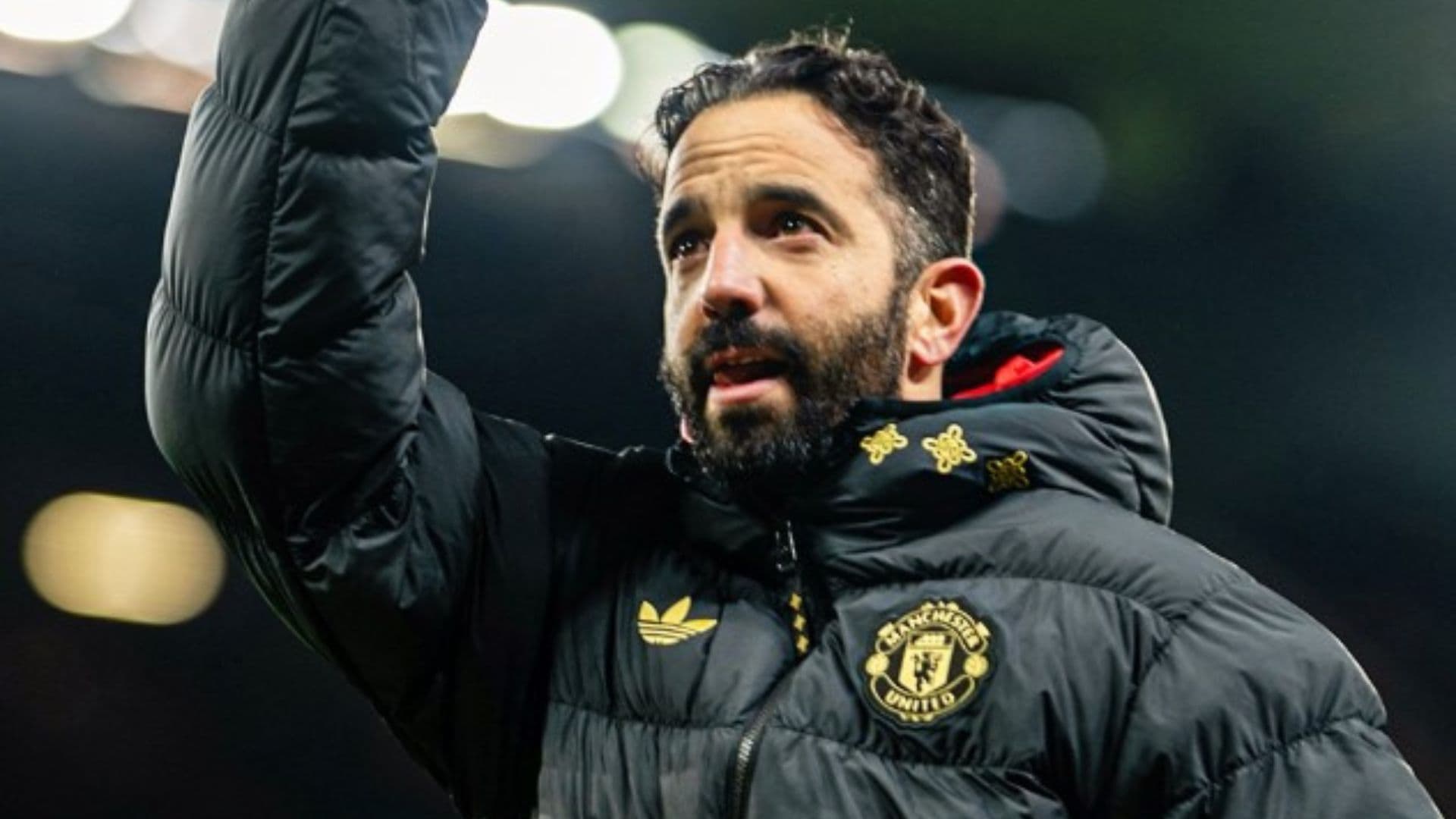

The first week of January has kicked off in a state of turmoil for Manchester United. The club’s top brass, led by the Ineos group and the Glazer family, have officially decided to sack Portuguese manager Ruben Amorim. The 40-year-old tactician failed to meet the high expectations set upon his arrival from Sporting Lisbon, leading to his premature departure. The 'Luso' coach’s dismissal comes after recording a disappointing 47% win rate across all competitions during his tenure with the Red Devils—statistically marking the worst performance by any manager at Old Trafford since the legendary Sir Alex Ferguson retired in 2013.
"With Manchester United sitting sixth in the Premier League, the club’s leadership has reluctantly made the decision that it is the right time to make a change. This will give the team the best opportunity of the highest possible Premier League finish", says the team in his official website.
It is worth noting that during his final press conference as head coach, Amorim made several statements that did not sit well with Manchester United’s board. The Portuguese manager claimed that his role went beyond being just the coach, asserting that he was the 'manager' of the entire club—a power move that reportedly created friction with the executive leadership. This bold stance on his authority within the organization's hierarchy is now being cited as one of the key factors that accelerated his exit from Old Trafford.
"I just want to say that I came here to be the manager of Manchester United, not the head coach. That much is clear. I know my name isn't Tuchel, I'm not Conte, and I'm not Mourinho. But I am the manager," Amorim stated following the 1-1 draw against Leeds United.
With Amorim’s departure from the dugout of one of Europe’s most prestigious clubs, the English media has already begun speculating on the top candidates to replace him. The focus is now on finding a manager with a proven track record and elite-level experience. This shift in strategy comes after the Ruben Amorim experiment, as he arrived from Sporting Lisbon—a club in a league often viewed as less competitive compared to Europe's 'Big Five': the Premier League, LaLiga, Serie A, Bundesliga, and Ligue 1. The board is now reportedly prioritizing a 'heavyweight' name who is already accustomed to the relentless pressure of a top-tier domestic competition.
Top Candidates to Replace Ruben Amorim at Manchester United
- Xavi Hernández: The Spanish manager has been out of the dugout for over a year and a half, having not coached a team since his departure from FC Barcelona. During his tenure with the Catalan giants, he successfully led the team to a LaLiga title and a Spanish Supercup trophy. Furthermore, he left the club with an impressive 68% win rate, a statistic that stands in stark contrast to the numbers recently seen at Old Trafford and makes him a highly attractive option for the Red Devils' board.
- Zinedine Zidane: Much like Xavi Hernández, the French icon has been away from the sidelines for over four and a half years. His last stint was with Real Madrid, where he orchestrated one of the most legendary managerial runs in football history, winning three consecutive Champions League titles. Despite his unmatched pedigree, a cloud of uncertainty hangs over his club future; persistent rumors suggest that Zinedine Zidane is waiting to take over the French National Team following the 2026 World Cup. This potential commitment remains the biggest hurdle for any club, including Manchester United, hoping to lure him back into club management.
- Enzo Maresca: The outgoing Chelsea manager arrives with a strong track record from his time in West London, boasting a solid 65% win rate. During his tenure, he successfully led the 'Blues' to glory in the UEFA Conference League and the FIFA Club World Cup. However, his departure was not purely down to results; instead, it was triggered by a direct clash with the Chelsea board. This falling out created a negative narrative in the British press, raising questions about his management style despite his undeniable success on the pitch.
- Gareth Southgate: The 55-year-old manager served as the head of the England National Team until July 2024 and is currently a free agent. He could emerge as a strong option for Manchester United, considering his deep knowledge of the domestic landscape. His familiarity with the English game could be a significant advantage, potentially easing his adaptation and helping him implement a tactical system that benefits the Red Devils in both the short and medium term.
Who will take over as interim manager?
For the time being, Manchester United has decided to turn to assistant coach Darren Fletcher. A former player for the club, Fletcher has spent several years working within the youth academy system, and his deep-rooted connection to the Red Devils makes him the chosen figure to lead the team during this transitional period.
"Darren Fletcher will take charge of the team against Burnley on Wednesday", says Manchester United on his statement.