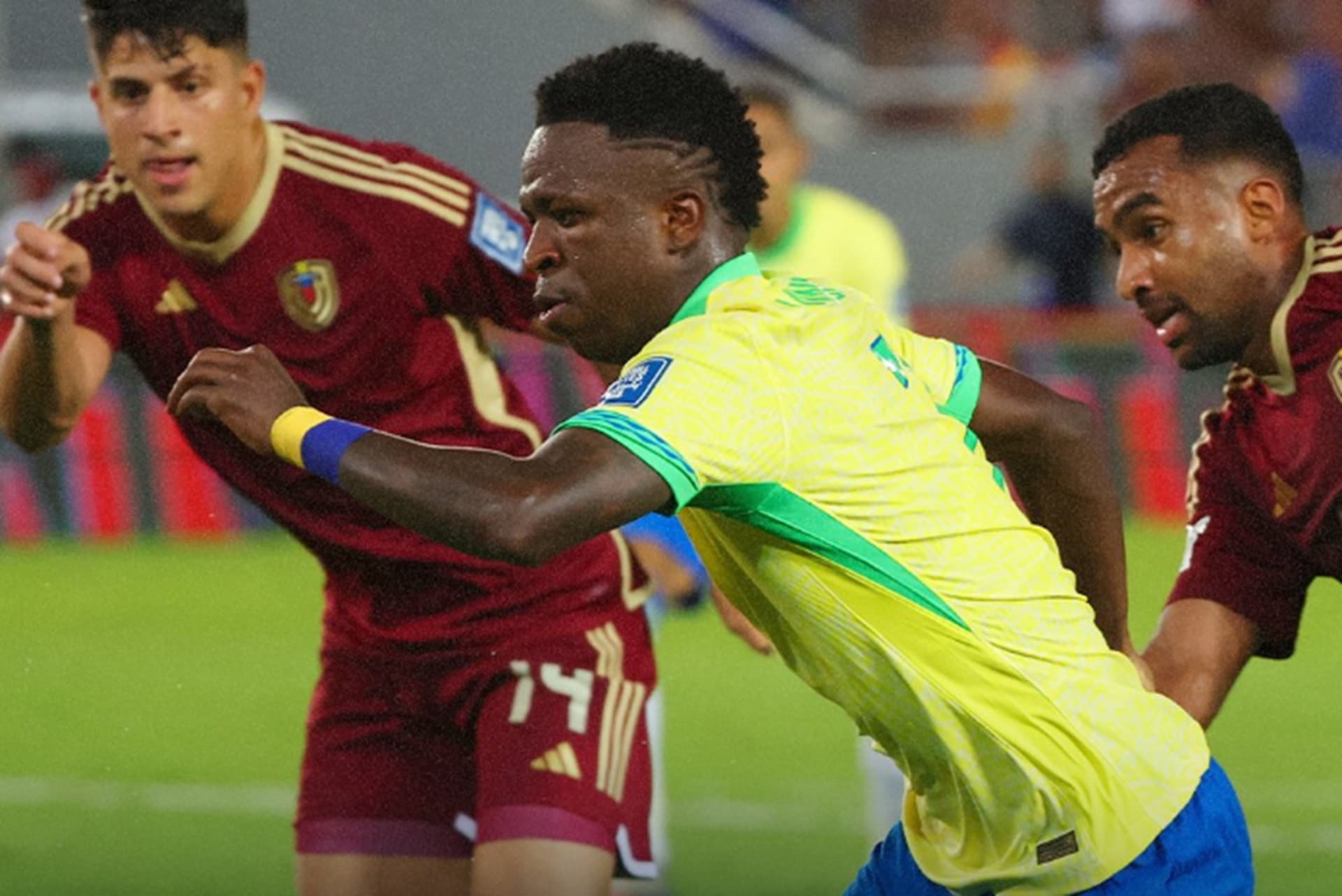

Just as the match between Venezuela and Brazil was ending with the score tied and the Brazilians dominating, the sprinklers were turned on at the Maturín stadium, which was taken as a dirty tactic by the Venezuelans to stop the match.
The Rivalry Between Venezuela and Brazil in Football: A Growing Competitive Clash
The football rivalry between Venezuela and Brazil is an interesting and evolving dynamic, especially in South American football. While the two nations don’t share the same historic level of competition as Brazil and Argentina or Brazil and Uruguay, their encounters have been increasingly intense and significant, particularly as Venezuela’s footballing prowess continues to grow.
A Historical Perspective
Historically, Brazil has dominated South American football, establishing itself as a global powerhouse with five FIFA World Cup titles, numerous Copa América victories, and a roster of football legends like Pelé, Ronaldo, and Neymar. On the other hand, Venezuela, often regarded as the “underdog” of South American football, has struggled to make its mark on the continental stage. Their national team, known as La Vinotinto, has long been seen as a weaker side compared to the footballing giants of Brazil, Argentina, and others in the region.
Venezuela’s footballing history is marked by a series of near-misses in regional tournaments like the Copa América and World Cup qualifying. For many years, Venezuela was considered the "easy opponent" in South America, but that narrative has slowly started to change as the country invests more in its football development and nurtures young talent.
The Rise of Venezuela: A Shift in Dynamics
In recent years, Venezuela’s football development has significantly improved. Under the guidance of coaches like César Farías (who led the team from 2007 to 2013), Venezuela began to show greater resilience and competitive spirit, even against South America’s traditional powerhouses like Brazil. The emergence of talented players such as Salomón Rondón, Tomás Rincón, and Juan Pablo Añor has helped elevate the national team’s performance on the international stage.
While Brazil remains the dominant force in South American football, Venezuela’s performances against them have been improving. Venezuela's La Vinotinto has been known to put up strong challenges against top teams, and their encounters with Brazil have become increasingly competitive.
Memorable Encounters: A New Competitive Spirit
Over the years, the meetings between Brazil and Venezuela have become more than just one-sided affairs. One of the most significant moments in recent years came during the Copa América 2015, when Venezuela held Brazil to a 0-0 draw in their group-stage encounter. This was a clear indication that Venezuela was no longer just a pushover and could compete with the best in the region.
In World Cup qualifiers, Venezuela has also been a challenging opponent for Brazil. While the results have still heavily favored Brazil, Venezuela has managed to earn some important draws and has shown greater resilience. A key example is their 1-1 draw in Caracas in 2016, during World Cup qualifying, which marked one of the rare occasions Brazil dropped points against the Venezuelans in recent memory.
Venezuela’s Growing Confidence
As Venezuela’s football continues to improve, so does its confidence on the pitch when facing a team like Brazil. The rivalry has become symbolic of the underdog challenging the established order. The competitive nature of these fixtures adds more fuel to the rivalry, as Venezuela looks to prove that they are a force to be reckoned with, despite Brazil’s footballing pedigree.
Venezuela’s increased competitiveness against Brazil has led to an evolving narrative in South American football. While Brazil remains the favorite in any encounter between the two, Venezuela’s rising stature gives the matchups an intriguing edge, and they are no longer viewed as a guaranteed win for the Brazilian side.
Brazil’s Dominance, but a Growing Threat
Despite Venezuela’s growing strength, Brazil remains the dominant side in the rivalry. Brazil has won the vast majority of their encounters, and the team continues to feature some of the best players in the world, such as Neymar, Casemiro, and Alisson Becker. Brazil’s style of play—a mixture of technical brilliance and attacking flair—continues to overwhelm many teams in South America and around the world.
However, Venezuela’s progress means that every encounter now carries more weight. Brazil, traditionally a team that breezes through South American qualifiers and regional competitions, must now approach their matches against La Vinotinto with more caution. Venezuela has the capacity to disrupt the best-laid plans, as seen in some of their more competitive performances in recent years.